


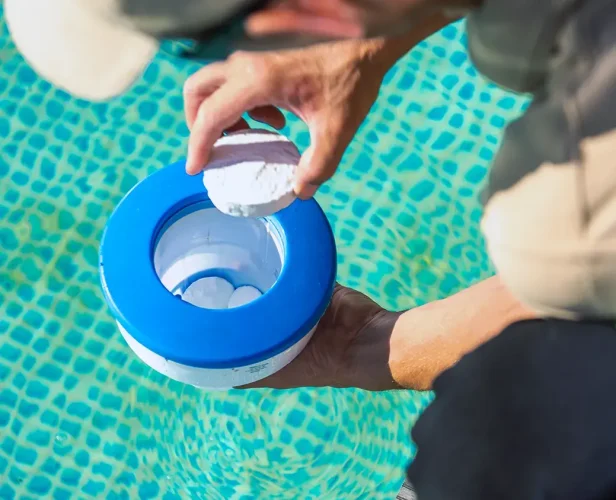
Keeping a home swimming pool clean is not only about making the water look clear. Proper disinfection is essential for controlling bacteria, algae, and other contaminants that can quickly develop in warm pool water.
One of the most convenient solutions for routine pool maintenance is the use of pool chlorine tablets. They are easy to store, simple to use, and can provide a steady release of chlorine over time. However, not all chlorine products are the same, and choosing the right type depends on the size of the pool, water chemistry, usage frequency, and maintenance routine.
In this guide, we look at how chlorine tablets work, how they compare with other chlorine products, and what homeowners should know before using them.
What Are Pool Chlorine Tablets?
Pool chlorine tablets are compressed chlorine-based disinfectants designed to release active chlorine into swimming pool water.
Depending on the formulation, pool sanitizers may contain different chlorine compounds. Two commonly discussed options are stabilized chlorine products such as trichlor and calcium hypochlorite-based chlorine products.
Calcium hypochlorite is available commercially in different forms, including granules and some tablet formulations. It releases available chlorine when introduced into water and is widely used for pool and water disinfection.
Unlike many stabilized chlorine tablets, calcium hypochlorite itself does not introduce cyanuric acid into the pool.
Why Is Chlorine Necessary in a Home Pool?
Even a small residential swimming pool is constantly exposed to contaminants.
Swimmers introduce sweat, body oils, cosmetics, and microorganisms into the water. Outdoor pools are also exposed to dust, leaves, insects, rainwater, and other environmental contaminants.
Without adequate sanitation, pool water can quickly become cloudy or develop algae and unpleasant odors.
Chlorine helps:
- Control bacteria and microorganisms
- Reduce algae growth
- Oxidize certain organic contaminants
- Maintain cleaner and clearer pool water
- Improve overall swimming pool hygiene
For these reasons, chlorination remains one of the most widely used methods of swimming pool sanitation.
How Do Chlorine Tablets Work?
Chlorine tablets gradually dissolve when they come into contact with pool water.
As the tablet dissolves, chlorine becomes available in the water and helps maintain a disinfecting residual. The rate at which a tablet dissolves depends on several factors, including water temperature, circulation, tablet composition, and the type of dispenser being used.
Some tablets are designed for slow, continuous chlorination, while other chlorine products are more suitable for rapid or shock treatment.
The main advantage of tablets for homeowners is convenience. Instead of adding chlorine manually every day, a properly selected tablet system can help maintain chlorine levels over a longer period.
Calcium Hypochlorite for Swimming Pool Disinfection
Calcium hypochlorite, commonly known as cal hypo, is an important chlorine-based compound used in swimming pool sanitation, drinking water treatment, wastewater treatment, and industrial disinfection.
TAAT CHEM supplies Calcium Hypochlorite (Ca(ClO)₂) for water treatment and swimming pool disinfection applications. The currently listed product is supplied as a white to off-white granular solid, with available chlorine typically in the 65–70% range depending on the selected grade and specification.
For commercial buyers, distributors, water-treatment companies, and pool chemical manufacturers looking for a reliable chlorine source, see the TAAT CHEM Calcium Hypochlorite (Ca(ClO)₂) product page.
Calcium hypochlorite is especially useful when a strong chlorine source is required without continuously adding stabilizer to the water.
Chlorine Tablets vs. Calcium Hypochlorite Granules
Although both products may provide chlorine for pool sanitation, their usage can be different.
| Feature | Chlorine Tablets | Calcium Hypochlorite Granules |
|---|---|---|
| Application | Routine chlorination | Routine or shock chlorination |
| Dissolving speed | Usually slower | Generally faster |
| Convenience | Very convenient | Requires more controlled dosing |
| Automatic dispensing | Often possible | Depends on equipment/product |
| Stabilizer | Depends on formulation | Normally unstabilized |
| Best use | Ongoing maintenance | Flexible pool treatment |
There is no single option that is ideal for every pool.
Some homeowners prefer tablets for everyday maintenance and use granular chlorine when faster treatment is required. The appropriate method should always follow the chemical manufacturer’s instructions and the pool’s actual water-test results.
How to Use Pool Chlorine Tablets Safely
Before adding any chlorine product, test the pool water.
Important parameters include:
- Free chlorine
- pH
- Total alkalinity
- Cyanuric acid in stabilized outdoor pools
- Calcium hardness
Pool water pH is commonly maintained around 7.2 to 7.8, because pH affects both swimmer comfort and the effectiveness of active chlorine.
Chlorine tablets should normally be used with equipment designed for the specific product, such as an appropriate floating dispenser, skimmer system, or automatic chlorinator.
Never assume that different chlorine products can be used in the same feeder.
Never Mix Different Chlorine Chemicals
This is one of the most important rules in pool maintenance.
Different chlorine compounds should never be mixed together unless the manufacturer specifically confirms compatibility.
Calcium hypochlorite is a strong oxidizing agent. It must be kept away from acids, organic materials, heat, contamination, and incompatible chemicals. Appropriate protective equipment should also be used when handling concentrated products.
In particular, calcium hypochlorite should not be mixed directly with other chlorine formulations inside the same container or chemical feeder.
Always read the product label and Safety Data Sheet before handling concentrated swimming pool chemicals.
How Often Should Chlorine Be Added to a Home Pool?
There is no universal schedule that works for every swimming pool.
Chlorine demand changes according to:
- Pool volume
- Number of swimmers
- Water temperature
- Sunlight exposure
- Rain and weather conditions
- Filtration time
- Organic contamination
- Existing stabilizer levels
During hot weather or periods of frequent swimming, chlorine demand may increase significantly.
For this reason, homeowners should rely on regular water testing rather than simply adding the same number of tablets every week.
Are Chlorine Tablets Suitable for Small Home Pools?
Yes, but dosage and tablet size matter.
A large chlorine tablet intended for a full-size swimming pool may be unsuitable for a small above-ground or portable pool.
Smaller pools contain much less water, which means a relatively small amount of concentrated chemical can cause a significant change in chlorine concentration.
For compact pools, always choose a chlorination product and dispensing system suitable for the actual water volume.
Tablets or Granular Chlorine: Which Is Better?
It depends on what you need.
If convenience and continuous chlorination are the main priorities, tablets can be an excellent option.
If you need greater control over chlorine addition, rapid treatment, or a non-stabilized chlorine source, calcium hypochlorite products may be more appropriate.
Many well-maintained pools use more than one treatment strategy during the swimming season.
The most important factor is not whether the chlorine comes as a tablet or granule. The important factor is maintaining proper water chemistry while using the selected chemical safely and according to its technical instructions.
Choosing a Calcium Hypochlorite Supplier
For professional pool chemical companies and international buyers, product quality is only one part of the purchasing decision.
A reliable supplier should also be able to provide:
- Consistent product specifications
- Certificate of Analysis (COA)
- Technical Data Sheet (TDS)
- Safety Data Sheet (SDS)
- Appropriate chemical packaging
- Export documentation
- International logistics support
TAAT CHEM supplies export-ready calcium hypochlorite from Iran with technical documentation and packaging options available according to customer and destination requirements.
Conclusion
Pool chlorine tablets provide a convenient way to maintain clean and hygienic water in home swimming pools, particularly when continuous chlorination is required.
However, homeowners should understand which chlorine compound they are using and regularly test their pool water instead of relying only on a fixed dosing schedule.
Calcium hypochlorite remains an important chlorine source for both residential and professional swimming pool sanitation. When handled correctly, it provides effective chlorination without adding cyanuric acid to the water.
Whatever chlorination method you choose, proper testing, storage, chemical compatibility, and adherence to the manufacturer’s instructions should always come first.
Frequently Asked Questions
What are the best chlorine tablets for a home swimming pool?
The best product depends on pool size, water chemistry, climate, and the desired chlorination method. Check the active ingredient and select a product specifically approved for swimming pool sanitation.
Is calcium hypochlorite suitable for swimming pools?
Yes. Calcium hypochlorite is widely used as a chlorine source for swimming pool disinfection and water treatment.
Does calcium hypochlorite contain cyanuric acid?
Calcium hypochlorite itself is an unstabilized chlorine source and does not add cyanuric acid to swimming pool water.
Can I mix calcium hypochlorite with other chlorine tablets?
No. Concentrated chlorine chemicals should not be mixed together unless compatibility is specifically confirmed by the manufacturer. Calcium hypochlorite is a strong oxidizer and must be handled according to its SDS and safety instructions.
Are chlorine tablets enough to maintain a swimming pool?
Tablets can help maintain chlorine levels, but complete pool maintenance also requires regular testing, filtration, pH control, cleaning, and monitoring of other water chemistry parameters.